
ACB registers disproportionate assets case against Karnataka Cong MLA
Zameer Ahmed Khan
-
Bengaluru, July 05: Anti Corruption Bureau (ACB) officials are conducting
raids on the properties belonging to Chamarajpet MLA and Congress leader B
Z Zame...
You are here:


POEMS OF DR. MAHENDRA BHATNAGAR
— Dr. B.C. Dwibedy

Dr. V.N.Mishra has rightly observed in his comments about Poems: for Human Dignity by Dr.M.Bhatnagar -a translated volume of his Hindi poems: “His man fired with faith divine moves on because he is firm in his conviction that one day the heart rose shall bloom in the midst of impediments galore (Poems: For Human Dignity-Introductory cover page remark by Dr. V. S. Mishra). It is definitely a giant leap by the poet towards the quest that this small essay is going to elaborate.
For the last half a century the poet has been with avowed activity towards glorifying human dignity. A majority of his poems flourish with such themes in the hearts of readers who seek human dignity at every step. It reminds us of the humanistic ideal: “the primacy of man in everything” or the Pythagorean maxim “man is the measure of everything”.
In his volume Poems: For Human Dignity at the outset the poet hoists the flag of love as the first marker of human dignity. From love has evolved life and with love life is lived and bereft of loveit is shattered. It is the driving force behind every action of man and this vital factor of life is at stake in the present world. Everything that man does looks at love. Here everything does not include the action of human beasts or rather we can call them human demons that the present world is replete with. The poet expresses his blissful attitude for mankind. He wishes every man to be rich with the worship of love.
Let every man
of the world
indulge
always
in this pure best worship.
(Poems: For Human Dignity-1)
The poet has lived the life of love and dignity and has experienced the pain of undignified life for almost three quarters of a century in the social history of the country. It is not possible for him to withstand such decline. He observes that the scene of love in the life’s drama is full of infidelity that leads to hatred, separation and divorce in conjugal life.
Dr. M Bhatnagar hasunfathomed sympathy for the dignity of woman. The way man is behaving with his creator mother, loving sister, nursing wife or the offspring daughter – it’s all exhibiting only infidelity in the place of love. The poet motivates the world to revive the dignity of woman. Moreover he is inspiring woman to keep her dignity erect on the touchstone of adversity.
Man has tried to utilize woman as a “purse purchased commodity”. The poet rather becomes rough in his voice by using phrases such as ‘soulless slave girl’, ‘brainless hand maid’, ‘lifeless doll’ etc. –metaphors for woman as in the context of today’s deteriorating life style. He has strongly objected to the projection of woman in the world’s eyes as ‘down trodden foot wear of man’. Moreover he rejects the age old Shakespearean maxim by saying that ‘frailty is not thy name’; rather he laments the ignored dignity of woman in every nook and corner of the world.
O, long deprived pitiable, sad,
Prisoner! You jumped in the battle field
Taking the oath of youth
Co-operating with the world-wide
Lament……
(Poems: For Human Dignity-274)
The poet envisions in every woman the greatness of epic character Draupadi and relates the world affair with the consequences of the fall of her dignity. Draupadi was ravished in the king’s court by Dushasan and the consequence was terrible. A tear from a woman’s eyes is not a good indication for the world. The poet’s prediction is meaningful in this respect.
You will create horrible turmoil
By offering of sacrifices,
Your struggle will not stop, you
Will shake the universe
Have to pay price to you ……
(Poems: For Human Dignity-274)
She is the living embodiment of love herself; when she is ignored her dignity is shattered, love –the driving force gets humiliated, peace is invaded and man’s life becomes barren, he is cursed. The poet’s vision is seen as an eye opener for the human world.
Dr. MBhatnagar invokes integrity in man who is utterly disintegrated from home, land, self and soul for the sake of money. This is another marker of human dignity but today’s man is divided in a hundred ways by caste, creed , religion, birth and so on; as such he is helpless, oppressed and shameful. In a good number of poems Dr. Bhatnagar uses an abusive tongue for man of this world while lamenting the fall of dignity into abysmal depth.
Bottomless fall of creation’s
grand creature.
Mean, narrow heart vomits
Poison creating disaster.
(Poems: For Human Dignity-80)
In a major part of the volume the poet depicts the fall of dignity. The notion that man is the replica of god has changed its meaning in the present context. While exploring the delicacies of human life the poet finds the inhuman substances. Man is not able to recognize his own self.
Again and again
our god incites us
to kill other’s god
to destroy the symbols of
their faith
and thus feel that
paradise
is secure only for us.
(Poems: For Human Dignity-68)
The poet here definitely points at the selfish attitude of man which induces him to be involved in acts that are not congenial to human dignity.
The division of man in various branches such as caste, religion, birth, status etc. is vehemently criticized by the poet. He inspires man to be united beyond all differences since that unified state of man is a step towards dignity. Then only poverty that compels man to be naked can come to an end.
March, march ahead!
To break
Bestial horns grown on man’s head
And sharp teeth
To snap
The inhuman casteism!
To concentrate
In one string
The society and the individual.
(Poems: For Human Dignity-80)
In a major part of his poetry Dr. MahendraBhatnagar has championed the cause of those who live life in an undignified manner due to poverty, untouchability, starvation caused by injustice and suppression by the strong, terrorized and suffering from violence. These ways of life have converted the life into hell. Man leaves with a new religion –that is the religion of deception. The poet strives hard to bring a change and induce man towards human dignity, to create a new surface – a platform – on which human dignity can take a stand.
Obviously, the poet does not appreciate the naked sense of communal dignity which is a vehicle for disharmony. A sense of communality is the allied force of jealousy and violence. Every community, rather every individual should be cautious that no community, no language, no religion gets damaged due to him/them; then only man will deserve the right of safeguarding his own dignity. The same principle works here- ‘do on to others as you wish to get’. The poet observes that communal harmony itself is a part and parcel of human dignity. Tolerating others’ creed is a healthy habit since it fosters positive sentiment in man leading towards safeguarding dignity.
Live in unity,
this is the call of Karim and Shyam,
There should be one Hind
is the call of Rahim and Ram
(Poems: For Human Dignity-80
In order to live life the common man has to work and earn. Love for labour is another facet of human dignity. Believing in wind-fall gain is detrimental to value of life. The poet tries to inspire man to grow with love for labour and not to tame the habit of swindling. That will control a major part of the world wide corruption. He vehemently criticizes those monks, politicians, ministers who suck blood from common man for amassing wealth and show to the world their fame and pride.
Dignity gives man protection from the attack of narrowness. Dignity of culture, heritage, and citizenship of a country helps man living with honour. Deception or a life of double standard is not regarded as a worthy way for man. The poet tries to develop in man an indomitable spirit to dominate his complexes such as greed, avarice, anger etc. However, this is a transcended level that is to be reached at with much concentration and avowed activity by man.
Will rise above each division
Forgetting the difference
Between the familiar and unfamiliar,
Will welcome all.
(Poems: For Human Dignity-58)
It will be a life of self-restrained liberty. The poet wants to see man in the form of a free willed, self-disciplined, controlled and balanced fellow traveller. He observesthat a man who exercises his liberty carelessly so as not to care for another’s prestige and recurrently hurts others is not a man who deserves any dignity.
This man
Shot dead
That one
With a bullet,
Because
He
Spoke
A different
Language.
(Poems: For Human Dignity-64)
Not only that but if a man worships the same god in another name, another form, another language he is abominated. The poet has an aversion towards such people who cannot understand such minimum surface differences and thus cannot tolerate others. He invokes modern man with a great hope.
Consider different languages
And scripts
As the accomplishments
Of human intellect.
Modern men!
Now don’t remain mute
And fence sitters.
(Poems: For Human Dignity-69)
The poet wishes to establish a sublime human religion which will be the marker of human dignity and human identity. He gives a clarion call to go back to the age of homosapiens when man’s identity was not linked with a country, a religion, a caste, a sub caste, a language, a dialect, a colour and a race. Through ages we have developed and we have fostered a block of ego for our dignity and that has taught us all the undignified manners.
Sun gives its light equally to the flowers and weeds and that is its dignity. Man will love the rich and the poor equally- that will be his dignity. Man in his present stature gives a shabby look. It is not the Shakespearean man who is known as the paragon of beauty made in the image of God, but it is the man without dignity. The poet does not find any light in the future path of man.
On man’s future path
Reigns the limitless darkness,
Reigns the thick darkness!
No moon or sun visible
Not even alarm trumpet is heard.
On the cliff of death
Stands the hushed humanity
Staggering off and on!
(Poems: For Human Dignity-151)
The poet heavily draws upon the cause of grief in the down trodden men who are deprived of all the pleasures of life and who are left with no choice but to live without human dignity. The poet advocates in support of them and makes a resolution:
Dignity of human may ever
Be secured and respected
It’s our resolution!
We ourselves be the maker of our fortune.
(Poems: For Human Dignity-151)
The poet’s perseverance towards human dignity is a theme that indicates the progressive nature of his writings.
It is worthwhile to mention here that Mrs. Akanksha Yadav is continuously working in the field of literature and blogging for a long time. Her writing in various fields have been published in almost all eminent magazines, and on internet. Two creations of Akanksha Yadav, namely ‘Chaand pr paani’ (Nursery Rhymes collection) and ‘Krantiyagna: 1857-1947 ki gatha’ have been published. Along with newspapers and magazines, she actively writes on internet also, her work can be found on a number of web/ e-magazines, social media and blogs. Akanksha Yadav have special interest in women issues, child issues and social issues, women empowerment reflects in his writings.
She has been earlier awarded with a number of social and literary organizations. Which includes ‘Awadh Samman’ by the Chief Minister of Uttar Pradesh Mr. Akhilesh Yadav, ‘Decades best blogger couple award’ and ‘Parikalpana Blog Vibhusan Award’ by Parikalpana Group, honorary degree of Doctorate (Vidyavachaspati) by Vikramshila Hindi Vidyapeeth, Bhagalpur, Bihar, ‘Dr. Ambedkar Fellowship National Award’ and ‘Veerangana Savitribai Phoole fellowship award’ by Bhartiya Dalit Sahitya Academy, ‘Bharat Jyoti’ award by Rastriya Raajbhasha Peeth Allahabad, ‘Hindi Bhasha Bhusan Award’ by Sahitya Mandal, Srinathdwara, Rajasthan, award by Prabhat Prakashan, New Delhi for ‘SMS’ poem.
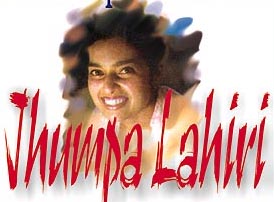 Indian-American writer Jhumpa Lahiri won the USD 50,000 DSC Prize for Literature, one of South Asia's top literary awards for her book 'The Lowland', it was announced at the Jaipur Literature Festival on Thursday evening.
The Pulitzer Prize winning author's tale of Indian brothers bound by tragedy was also shortlisted for the Man Booker prize last year.
The five authors shortlisted for the award were Bilal Tanweer for "The Scatter Here is Too Great", Jhumpa Lahiri for "The Lowland", Kamila Shamsie for "A God in Every Stone", Romesh Gunesekera for "Noontide Toll" and Shamsur Rahman Faruqi for "The Mirror of Beauty".
The Lowland was Lahiri's first book, but the fourth one to be published.
The DSC Prize for South Asian Literature was instituted in 2010 by Surina Narula.
According to the official website, "The submitted book can be written by an author of any ethnicity from any country, which predominantly features themes based on South Asian culture, politics, history, or people."
For the purposes of the award, the region includes India, Pakistan, Sri Lanka, Bangladesh, Nepal, Bhutan, Maldives, Burma and Afghanistan.
"This is an enormous honour for 'Lowland' and for me personally. I wish I was there in person to receive the award," newswire PTI quoted as saying through a phone conversation from Rome.
"I published the book with some apprehension that I have not done justice to the events that transpired in the story. I heard about what was happening in Calcutta at that time and based on what I heard I was curious over the years and novel was result of the curiosity," she added, according to the PTI report.
The prize was given by poet Vijay Shesadri at a ceremony at the ongoing Jaipur Literature Festival. Publisher Caroline Newbury accepted the award on Lahiri's behalf.
South Asia Today News Network

- More than 30 bloggers and litterateurs from across the world felicitated
- Five books and Parikalpana Samay Monthly Magazine along with Parikalpana Kosh Website launched
- Open discussion held on the topic ‘Society of margins on blog’ by South Asian bloggers


By Staff Reporter

By Shahnaz Siganporia
Mountain Echoes is an annual literary festival held in Thimpu, the capital of the happiest of nations -- Bhutan. A celebration of Himalayan culture that began in 2010, this intimate literary festival explores a cross-cultural dialogue between India and Bhutan. So imagine long literary discussions, book launches, film screenings, music concerts, workshops and schmoozing with the South Asian literati.
 This year, the fest will be held from May 21-24 at three venues in Thimphu: The Taj Tashi Hotel, the Tarayana Centre and the Nehru-Wangchuk Cultural Centre. If you're a jaded culture vulture that needs more persuading, here's five reasons to talk books in this breathtaking Himalayan kingdom.
It's in the happiest country in the world
Move over Pharrell, 'cause we're feeling a new happy! Wedged between India and China, the Buddhist kingdom of Bhutan is famous for its gorgeous Himalayan landscape, distinct culture and Gross Happiness Index. It's the only country that goes beyond economic indices and factors happiness into the quality of life by markers that take into account sustainable development, environmental protection, cultural preservation, and good governance.
Picture discussing literature in a land where traffic jams make it to the headlines, plastic bags are banned, and smoking and the sale of cigarettes prohibited. (Although international visitors may carry upto 200 cigarettes for their personal use but have to pay a 200% duty and carry a smoking permit at all times.)
 The Queen Mother takes part
Yes, a tonne of literary and cultural fests boast royal patronage, including this one, but her Majesty the Queen Mother Ashi Dorji Wangmo Wangchuck is also an accomplished author. Her first book, Of Rainbows and Clouds is a riveting family saga capturing the life and times of her father Yab Ugen Dorji. Her second, Treasures of The Thunder Dragon: A Portrait of Bhutan is a mix of memoir, history and folklore. Her participation extends way beyond the officious inaugural ceremony and she will be found in conversation with diplomat and author Navtej Sarna.
The dialogue between two very different democracies
From discussions on animism in the Himalayas and the art of folklore, to a deliberation on aphrodisiacs and food to suit your mood, and workshops on how to write a crime novel, the festival calendar is packed with a miscellany of subjects and speakers.

But the most anticipated discussion of the festival is a session titled 'Democracy: The Will of the People', between Lily Wangchuk, the first woman president of a registered political party in Bhutan, and author-diplomat Pavan K Varma. Dago Tshering, the former Bhutanese ambassador to India will also interact with journalist Mihir Sharma. The democratic systems of India and Bhutan, both emerging from landmark elections, will be juxtaposed in light of the outcomes of the change in government.
It's not just about Bhutanese authors
Apart from the massive Indo-Bhutanese contingent of writers, commentators and speakers, Mountain Echoes brings together a host of artists who are all part of the new Himalayan narrative. Sample these other attendees: Award-winning Scottish travel writer Gavin Francis, who is working on a book on the region; Danish photo-journalist Marie Venø Thesbjerg, who will be showcasing her most recent book My Way Of Life -- Stories by Children of Bhutan, which tells the story of Bhutanese culture in transition; and Yoko Ishigami, a Japanese artist who has been learning traditional Bhutanese painting and will be exhibiting at the festival.
Experience Bhutanese subculture
 Cultural expression in Bhutan is steeped in tradition and a need to preserve and protect is intricate to the nation's mandate. While things are usually done the traditional way, which is the window most visitors get into Bhutanese life, the festival exposes fissures of the new wave. Films like Tashi Gyeltshen's The Red Door or Kesang Chuki Dorjee's documentary Bhutan Women Forward will introduce audiences to Bhutan's bold voices.
Open mic and jam sessions with Bhutanese bands like Zhaw and The Ngorigaps, The Baby Boomers, Poisoned Apple and Daydream Farmers will reveal how the sounds of rock 'n' roll give voice to another side of Bhutanese culture.

South asian author's story
By Nazia Rizvi
By Nazia Rizvi
Kunzang Choden is the first Bhutanese woman writer to write a novel in English.
She was born in 1952, in the year of the dragon, in Bumthang, Central Bhutan. She spent her early childhood in Bhutan but went to India (Darjeeling) for her primary and secondary education. At the age of nine, Kunzang Choden trudged 12 days on foot and on horseback through dense jungles and splendid mountains in the daytime and slept inside narrow caves at night. She was on her way to school.
It was the Fifties. Bhutan, almost an isolated Himalayan kingdom till then, had hesitantly opened its doors to modern education. Till then, mostly boys received religious education in the Buddhist monasteries. But now, as government schools opened up, education became accessible to all. Girls too could attend these schools.
But Kunzang's father had a more radical idea. A prosperous farmer in central Bhutan's Bumthang district, he decided to send his daughter to a convent in eastern India. The villagers thought he was crazy. For a society where education was almost synonymous with men and religion, the idea of sending a daughter to school abroad was unheard of, almost sacrilegious. But Kunzang's father knew what he was doing.
So one fine day, they set her off on an arduous trek to St Joseph's School, Kalimpong. Kunzang even had a retinue of servants, and, hold it!, a translator, for company. Cooking their own food, dancing around campfires and listening to the sound of the wind, it was like a happy Long March towards the unknown. 'I didn't even know where I was going. I only knew India as the land Buddha came from,' recalls Kunzang, whose just-released work of fiction, The Circle of Karma (published by Zubaan/Penguin), makes her Bhutan's first woman novelist.
She has a BA Honours in Psychology from Indraprastha College in Delhi and a BA in Sociology from the University of Nebraska, USA. She has worked as a teacher and later for the UNDP in Bhutan. From 1990 onwards, Kunzang has been writing on Bhutanese oral traditions, folklore and women. She lives in Thimphu Bhutan with her husband and continues to research and document Bhutan's oral traditions.
Her first novel, The Circle of Karma, was published in 2005. She has penned short stories that have been compiled into books; Folktales of Bhutan, Bhutanese Tales of the Yeti, Tales in Colour and other stories.
She is also the author of Chilli and Cheese- Food and Society in Bhutan and Dawa: The Story of a Stray Dog in Bhutan. She is a Co-Director of the Mountain Echoes Literary Festival and has written and published a number of books for young children in last few years.

New Delhi: Former Miss India Finalist Tahira Kochar who debuted in recently released Rabba Main Kya Karoon launched her grandmother Nony Singh’s Photography Book 'The Archivist'. The event happened at India habitat Centre, Lodhi Road, New Delhi.
Nony Singh is the mother of famous photographer Dayanita Singh, who is Tahira Kochar’s Maternal Aunt. The launch happened on the occasion of “Delhi Photo Festival” where Nony Singh with her granddaughter Tahira Kochar launched her book “The Archivist” and presented to veteran Photojournalist Raghu Rai.
Book Reviews
Reviewed by Dr. T.V. S. Reddy
This is a work on the entire creative literature of Sri Aurobindo comprising of his poetry, dramas and short stories. There are number of books on his creative literature besides philosophy, essays and other areas of his life and work but it is perhaps the only or among the very rare books on all types of creative literature by one of the greatest philosophers, poets and authors of the twentieth century.
Aju Mukopadhyay’s latest work The World of Sri Aurobindo’s Creative Literature, recently published by the New Delhi-based Authors Press, in 2013, is yet another contribution to the ever increasing world of appreciative evaluation of Aurobindo literature. The writer has done tremendous work before undertaking the writing on the creative literature of Sri Aurobindo. Only after having gone through the works of Sri Aurobindo and some of the critical works on the great literary giant and having acquired adequate knowledge of and mastery over the creative writings of Sri Aurobindo he has undertaken this critical venture on the great master.
In Focus
He has divided the book into twelve chapters with the first one as usual on Sri Aurobindo’s life, which stretches from 15th August 1872 to 5th December 1950 covering a span of seventy eight years, indeed a dynamic life vigorous with professional, political, literary, yogic and spiritual parts and activities connected with four different and distant places - Bengal, England, Baroda and Pondicherry.
Even after becoming a Mahayogi he was never indifferent towards his nation and he was so deeply committed to the full freedom of the country that he sent a message in 1942 to Gandhi and his close circle to accept the proposal of Sir Stafford Cripps which, of course, was thoughtlessly rejected by Gandhi, and the decision was responsible for all the future ills of India i.e. partition of India, the resultant communal violence and endless blood-shed, and the Kashmir problem, etc.
His active spiritual role at the subtle level in turning the tide of the World War II in favour of Britain resulting in the unexpected reversal of fortunes of Hitler the leader of the Asuric forces is a well-known fact though it is beyond the pages of history. As ordinary people on this earth we do not know the gravity of the great sacrifice he made by suddenly leaving this mortal coil in order to expedite the process of transforming this life on earth as life divine by bringing the supramental consciousness to the earth atmosphere.
While the second chapter, a tiny one, introduces the creative literature of Sri Aurobindo in a threadbare way, the third chapter is a reasonable sketch of Sri Aurobindo as a poet and it refers to many poems, short as well as long pieces such as ‘Night by the Sea’, ‘A Thing Seen’, ‘His Jacket’, ‘Songs to Myrtilla’, ‘Envoi’, ‘To a Hero Worshipper’, ‘Chitrangada’, ‘Ulupi’, ‘The Rishi’, ‘Urvasi’, ‘Love and Death’, ‘Invitation’, ‘Who’, ‘Surrealist’, ‘Electron’, ‘In the Moonlight’, ‘The Sea at Night’, ‘The Tiger and the Deer’, ‘The children of Wotan’, ‘Bride of Fire’, ‘Rose of God’, ‘God’s Labour’, ‘Journey’s End’, ‘The Pilgrim of the Night’etc. Aju Mukhopadhyaya writes that “‘A God’s Labour’ is a biography and history of Sri Aurobindo’s spiritual odyssey, not on the surface but in its occult depth”(p.49). Most of the poems are philosophical and the writer thinks that ‘The mystic and spiritual poems are full of autobiographical references of a yogi’ and ‘his poetry is a complex product of his being’ (p.52). The writer’s critical eye does not fail to see some of the defects and he remarks that “there are repetitions galore” (p. 52).
Then comes the 4th chapter ‘Sri Aurobindo’s Greatest Creation: Savitri’, a relatively detailed sketch of the great work which “is a yogic creation by a poet who became a seer by his tapasya, repeating the Vedic world in the twentieth century. It has no parallel anywhere so far on earth: the creation of a spiritual epic of 23,800 and more lines, the largest in English language in modern age.” (p.54). What Savitri is in poetry, The Life Divine is in prose; while one is a great poem, the other is a monumental philosophical work. The lines of Savitri came from a higher consciousness, termed as Overmind level, higher than the intuitive level.
Aswapathy’s sadhana, his yoga and spiritual experiences and travel through graded paths, planes and levels of consciousness are in fact the spiritual experiences and visions of Sri Aurobindo himself. The descent of Savitri to the earth is an answer to the yogic call of Aswapathy’s yoga and meditation and tapas. The writer is fully conscious of the fact that “The poem is full of drama”(p.62) when the sage Narada comes and reveals to Aswapathy and his wife that Satyavan is destined to die exactly in a year. With her firm will she resolves to marry Satyavan the man of her choice:
I am stronger than death and greater than my fate,
My love shall outlast the world, doom falls from me
Helpless against my immortality.
Fate’s law may change, but not my spirit’s will. (Savitri, pp.429-432)
She marries Satyavan and after a pleasant year of marital joy he dies at the fated hour in the forest with Savitri by her side. Now the real test begins for Savitri and the rest of the poem is a description of her epic struggle with Death to rescue the soul of her husband from the iron clutches of the Lord of the Underworld. At last she, being the Divine Mother, succeeds in persuading and convincing Death and in releasing Satyavan’s soul from the irreversible grip of Death. As the writer aptly says, “By saving Satyavan, Savitri saved the earth. As the earthly dawn was blooming forth, Savitri’s bosom nursed a greater dawn” (p.65).
The fifth chapter deals with the critics of Sri Aurobindo’s poetry and refers to the adverse remarks of some established Indo-English poets such as Nissim Ezekiel, P. Lal, Keki N.Daruwalla. While P. Lal after a few years revised his opinion and wrote an appreciation of Sri Aurobindo acknowledging him as a Titan of Indo-Anglian literature, Daruwalla remains a confirmed person in his negative approach and does not come out of the narrow confines of his critical bias and fractured understanding. Aju Mukhopadhyaya makes a mention of the views of the early critic Mr.James Cousin who could see both the positive and negative aspects and also Sir Herbert Read who considers “Savitri is undoubtedly one of the world’s great poems”. The present writer seems to have gone through the recent work on Sri Aurobindo by Peter Heehs and as such he quotes the opinion of this controversial biographer too: “Aurobindo’s own poetry, rooted deeply in the soil of the nineteenth century, was out of date before it saw print” (p.81).
The next six chapters from six to eleven deal with Sri Aurobindo the dramatist and with some of his select plays such as Perseus - the Deliverer, a comedy with Syrian background, Rodogune - a significant tragedy with Syrian background, The Viziers of Bassora - the most entertaining romantic comedy and an adaptation of the story of the well-known Tales of the Arabian Nights, Eric - a romantic play with a gripping theme from the heroic age of ancient Norway and Vasavadatta - an interesting play with a pleasant ending taken from Somadeva’s Sanskrit workKathasaritsagara.
The twelfth chapter which is the last one deals with Sri Aurobindo’s short stories, a less-known area, for he is mostly known as a poet, a revolutionary, a scholar, a philosopher and a yogi, but he is ‘little-known as a story-teller’. “I also wrote some stories but they are lost; the white ants have finished them,” Sri Aurobindo sighed lightly and continued humorously “and with them has perished my future fame as a story-teller…. Most of my stories were occult.”
He recollected it before his disciples on 3rd January 1939. Now we are fortunate that four of his stories written in English were spared by white ants and they are ‘Golden Bird’, ‘The Phantom Hour’, ‘The Devil’s Mastiff’ and ‘The Door at Abelard’ and they are all under the common title Idylls of the Occult. It ends with the story The Door at Abelard and as the writer says “This is not only occult but also a horrible story, which keeps its strong after-effect on any reader of ordinary nerves” (p.159).
Thus Aju Mukhopadhyay’s literary work The World of Sri Aurobindo’s Creative Literature covers almost all the genres of the great writer’s literary works. The diligence with which he has studied the critical and biographical works on the Mahayogi and the hard work he has put in collecting some of the details of a very rare nature are something quite commendable. The book as a whole reflects not only the scholarly bent of the writer but the characteristic creative side of his personality shaping his critical perspective in interpreting the literary works of the Sage of Pondicherry. The beauty of the book gets definitely boosted by the quality of the publication by the Authors Press.
© Dr. T.V.S. Reddy, 2013
Book Review
by Kedar Nath Sharma

by Kedar Nath Sharma
This book contains 71 Hindi poems composed by Dr. Mahendra Bhatgar translated into English by the poet himself, two other doctors of literature and by the present author. The blurb of the book is written by a Professor who is carried away by the romanticism of Wordsworth so much so that he himself sounds poetic while eulogizing Dr. Mahendra Bhatnagar.
Poetry or any other kind of literature should be evaluated objectively without any subjective/ emotional indulgence. Indian critics are given to praising (without showing the drawbacks) the works of their target authors, because they fear that the evaluated author would get annoyed if dispassionately analyzed. It has been observed several times that they do get annoyed. Therefore praising the works of the author is considered a safer course than doing justice to literature.
The title Bhor Sey Saanjh( Dawn To Dusk) suggests that some poems were composed in his youth and some belong to the age of maturity ( old age). But in the book there is no such segregation. The poet could have given the date of composition of each poem. However a meticulous reader can easily discern.
In all 32 poems have been translated into English by the poet himself, 12 poems after the first 27 are translated by Dr. Mukesh Sharma, 16 by Dr.Narendra Sharma ’Kusum’ and 11 by K.N.S.
The first three poems of this collection are about the stars. Taron Sey (To Stars) shows how the poet comprehends the twinkling stars delineating the human predicament of exploitation and oppression. The youthful poet studies objects of nature in the light of what he observes in the society of that time. Timir Sehchar Tarak shows that happiness and sorrow of human life are similar to the rising and setting of the stars during the night and day the twin divisions of time in which human beings have to live. The natural association of light and darkness points out that the trials and tribulations alternating with joy and merriment in human life too are natural.
In Jagtey Tarey (The Waking Stars) Mahendra Bhatnagar is not only poetical but also factual as unlike human beings the stars are bereft of dreams and devoid of happiness and sorrow which the human beings experience. This poetry can conveniently be called romantic but is much deeper than that.
Pure romanticism is tangible in the poem Sandhya (Evening). In it the poet has depicted a photographic picture of the landscape which he himself is watching while sitting on a mound.
The advent of the rainy season in Barsat (Rain) brings relief to human beings. The pictorial quality of Mahendra Bhatnagar’s poetry becomes very vivid in Bhikaaran (Woman Beggar). Its pathos shows that the poet is endowed with the milk of human kindness. The tragic death of the destitute is extremely touching. In Vardaan( Boon) pessimism gives way to optimism. Hope seems to sustain life. The metaphor of quiet solitary night, at its declination, standing still like the puzzle of life presents an unique example of Bhatnagar’s poetic craftsmanship in Dhalti Raat (Night At Its Fag End). The night here is personified and in the second stanza mannequin like manifesting satiety, modesty and loneliness seems sleeping, as if, it has lost everything. This is perfect Keatsian picturization. The poet admonishes the night not to be so engrossed lest there should be a new dawn and that the string of damask sun rays is not snapped. The poet is using the Hindi language like a juggler uses his artifacts to present diverse patterns.
That the young poet is very ambitious and is not finding the prevailing circumstances conducive therefore his poems are effusing his frustration. In Sathi Sey (To the Companion) he is seeking assurance from his buddy whether she would stand by him when he is without sufficient means(oil) as no wick can emit light without the oil. The poem Vaidna (Agony) describes the pain felt by the poet caused by the dumb (mook) deficiencies. In Deepak (Lamp) he is talking about mook jeewan (dumb life) in Sathi Sey (To the Companion) he is seeking a boon for his mook mun (dumb mind) and in Aseh (Unbearable) he is complaining about his mook haridey Veena (Dumb heart lyre).
In Yug Kavi the poet is alluding to the scientific revelations made in the world as a consequence of which today’s literati are discarding yesteryear’s imaginative literature which once used to be the trend.
In Abhi Nahin (Not Yet) the poet laments that nobody is protesting/rebelling against centuries old oppression and barbarity because of the weakness of the oppressed human mind. No revolutionary has yet taken birth. The similar strain of poet’s anguish continues in Mashaal. In Greesham (The Summer) also he is moved by the discomfort experienced by the poor. In Naya Sabera (The New Dawn) he is hoping for the amelioration of conditions. In Kavi (The Poet) Mahendra Bhatnagar calls himself the rebel born to herald new times with relentless efforts and indomitable courage. In the poem Nari (Woman) the modern woman seems to be the harbinger of change in the society, In Parbhanjan (The Storm) the poet is again harping on the coming revolution. But in Nao Sainik Vidroh (Naval Revolt) he is describing how the revolt in the Indian Navy had shaken the citadel of the British rule by forging unity in the country.
Vikal Hai Desh (The Country is Restless) because of the slavery, Sampardyak Dungey (The Communal Riots), Janvani (Public Voice), Jindgi Kaisey Badalti Hai (How Life Changes), and Merey Desh Mein (In My Country) all show the poet at the dawn of his life getting perturbed by the miserable conditions of the people of all walks of life.
All these 27 poems are translated into English by Mahendra Bhatnagar himself. One phase of his poetic career has come to an end so the poet has added 12 poems translated by Dr. Mukesh Sharma. These poems show a change in the mood of the poet as well as that of the tormented but lethargic people of India who have changed their attitude towards foreign rule. They have been roused. In Sadiyon Baad (After Centuries) The Citadel Of The Imperialists Has Been Shaken. The people’s vigour has been stirred and they are marching on a collision course creating seismic tremors. All darkness is shattering, the storms of rebellion are raging. The Hurricane of Independence ( Swatantrata Jhanjhawat) is rising like a cyclone to root out frustration, personal rivalries and stupidity. The tyrants along with their sky high mansions have been undone and the land has been changed into a cemetery. So there is a need for a Rill of Nectar (Piyush Dhara) endowed with a healing touch to start flowing.
A sea of humanity (Jan Samundar) is abounding and advancing step by a step. These steps are the steps of martyrs of an era. These will never stop. They will create a new world and the youth of this era is challenging the agents of destruction. The same feelings are again surging in Ajay( Invincible). The indomitable youth of the time does not want to be pushed into frustration again because he feels that he is immortal and his every emotion is ever enduring. He does not want to stop in spite of any impediments.
With the passage of time the mood of the poet has also changed. In Pashaan-Ur (Obdurate Heart) he finds that the people have become stubborn. They have become cruel. The volcano of destruction has erupted and the creativity has stopped. In the third stanza of Sambal (Anchor) the poet sounds hyperbolic but he is determined to over come all obstacles in life. The best thing in this and other poems is the brevity, raciness and the alliterative use of the language which makes Mahendra Bhatnagar stand out as a distinct craftsman in Hindi poetics. In Mujhey Yaad Hai (I Remember) the poet is damning the exploiters. In Kala (Art) too he is seeking equality in the social structure. In Manzil Kahan (Where Is The Destination?) the poet is reiterating his determination to usher in new era of his dreams. In Jindagi Ki Shaam (The Evening Of Life) the poet is perturbed on watching the poor old men facing the pangs of life and he feels strongly to ameliorate their condition. While thinking of humanity he is reminded of the mythological character of Manu and man’s tendency to rise up in rebellion to face even death as at Jalianwala Bagh. Life (Jindagi) for the poet seems gloomy. Look at the imagery conceived in Hindi and translated into English:
The nauseous smell
Of a putrid carcass
Saturating the heart.
He hates such a life.
The poetic journey of Mahendra Bhatnagar has reached the third stage. The poems of this stage are translated by Narendra Sharma “Kusum” (NSK). The most of the poems in this section are real poetry in which poet’s imaginative faculties have taken over the cogitations of his mind in the earlier poems of this book. The poet is at his best while composing poems about nature. In Barkha Ki Raat (Rainy Night) he has portrayed a picture in words. He has personified earth as a fair complexioned woman who has taken off her sari studded with stars and has stretched her robust arms for a bear hug. He has romanticized rain and sexualized earth. In Chaand Aur Tum (You and the Moon) he is making use of the stream of consciousness device. Sitting on the terrace he is contemplating that his beloved too must be sitting on a roof top and looking at the moon as he himself is doing.
Look at the delicacy of his thoughts in Jao Nahin (Do Not Depart). He is pleading with the night not to depart because during one such night some one had bequeathed the wealth of her beauty to him and that night was the witness to such an emotional surrender and fondness.
The poet is describing the anguish of mind he has experienced while expecting the arrival of his beloved in Pratiksha (Expectation). Another lovely poem is Poonam which is both a person of that name and the Full Moon peeping from behind a Peepal tree and shinning at the horizon respectively. But Poonam does not know that some one is watching her.
The glamorous beauty of a face ,Jhalakata Roop, peeping from underneath a thin veil is compared with the moon thinly covered by the clouds. Translating such a poem into English is a tough job because Kaajal is not collyrium which is a medicated eye lotion, its nearest word in English is Kohl which is black powder but yet not Kaajal. Anyhow this poem is enchanting. In Samarpan and Bada Kathin (Very Difficult) the poet is appreciating the beauty of the moon in its full glory. In Grehan (Eclipse) the poet seems to be infatuated by the moon and seems to stretch his imagination to the extreme. However, in Mrig Trishna (Mirage) the poet has a different thought to hang on the peg of moon. He opines that hankering after extraordinary targets is nothing but a wild goose chase. Probably at the time the poet composed this poem the astronauts had not yet set foot on the surface of the moon. In Samriti Ki Rekhayen (Imprints of Memory) the poet is stressing on the unflinching devotion to his better half. Chaand Merey Pyar (Moon, My Sweetheart) and Dopehri (The Midday) also the poet is expressing his devotion to his beloved.
With Tum Aaj Likh Lo (Note It Today) the fourth section of this book has started and the poet is predicting that in a few days time the ancient dilapidated chateau of slavery will crumble down and the rigmarole by which the poor, the farmers and the labourers were being squeezed will shatter. He is hoping for the change in the entire atmosphere. Frustration is writ large in Aik Saanjh (An Evening). The beauty and the brevity of poet’s language is very well illustrated in the following lines:
Maun
Mun – maina
Barsey naina!
Madhu- Madhav beet gya
O, Madhupayee
Madhuras reet gya.
Howsoever accurately these lines may be translated into English their delicacy cannot be effectively communicated. In Kiya Pata Tha (Who Could Foresee) the poet is depicting a predicament when a happy scenario is suddenly changed into the adverse situation. This happens in the lives of many people particularly at the times of disaster and natural calamities. On such occasions time tested convictions are shattered. In the poem Prarthana (Prayer) the poet is praying for defeat and hopelessness but still wants to sustain himself with expectation and desire. He wants to face the music of life with music on his lips.
Punarjanam (Reincarnation) reveals poet’s desire not to be born carrying the baggage of previous life. Probably he does not want the Karmas of the previous life to influence the present one. He wants the life after rebirth to be free from vicissitudes. With maturity in life the poet in Yachna (Solicitation) is not seeking to fulfill his youthful desires of flesh but looking at the well chiseled idol of God he wants to have a hug from God to enjoy the extreme pleasure of life. It would be absolutely wrong to find sexual connotations in this poem. In Raat Bhar(All The Night) fear and hope are juxtaposed with the blowing wind masterfully depicted in simple Hindi. The poem Shubhkamnayen (Good Wishes) reiterates poet’s love for freedom from foreign yoke everywhere. Samvart (The Turns of the Path) shows that tedium is preferred by the poet to the tediousness. The poems Apekshit (Most Wanted) and Samvet (In Harmony) are examples of typical mastery in using the Hindi language with which Mahendra Bhatnagar seems to be gamboling. So far as thought is concerned, as is usual with him he is hoping for optimism in a state of abject pessimism in the first poem but who is Sukanthi (The Sweet –throated Songstress) in Samvet ? It is an appropriate topic for research for any inquisitive student. Another topic for investigation is provided in Sulakshan (Good Omen) where the poet ends the poem with the possibility of meeting “you”. At the dusk of his life he is not hoping to meet his beloved of flesh and blood.
In Jaroori (Essential) the poet wants the humanity as well as the flora and fauna to be protected from the selfish inhuman beings and the terror mongers. Similar feelings are expressed in Swatantra (Liberated) where the poet says that the entire sky is for all where all can fly unhindered but with discipline. The poet is feeling hurt while seeing the life turn topsy-turvy from goodness to evil in Vidambana (Irony). But he has remained unaffected during the trials and tribulations in Aprabhavit (Uninfluenced).The book ends with the poem Aatank Mochak- New Year 2009 in which the poet wishes and swears that everybody including all Indians will be well protected and happy. His foreboding has proved true to some extent.
Mahendra Bhatnagar is a sensitive person endowed with the qualities of both head and heart. His poetry broadcasts his humanistic virtues, his concern for the destitute,love for freedom, peace and prosperity. He handles Hindi language as a potter moulds the clay. His treatment of nature is unique. While entering 87th year of life he is going young and pulsating with verve. The readers can expect something still more edifying and extraordinary from him.
Author : Dr. Mahendra Bhatnagar
Born : 26 June 1926 — Jhansi [Uttar-Pradesh]. Writings from 1941. M.A. (1948) and Ph. D. (On the novels of Premchand / 1957) in Hindi (Nagpur University). Retd. from the post of Professor (Madhya-Pradesh Govt. service) : 1984. At present Research Guide & doing independent writings. Bi lingual poet (Hindi & English).Eleven poetry collections and five distinguished poetry anthologies are published in English. Poems translated and published in book-form in almost all the Indian languages and many foreign languages (Czech, French, Japanese, Nepali). A well established Hindi & Indian English Poet.
*Contact : 110, BalwantNagar, Gandhi Road, Gwalior 474 002 (M.P.) India. Phone : 0751-4092908, M - 8109730048.
*E-Mail : drmahendra02@gmail.coms.
*Internet Link : http://en.wikipedia.org/wiki/Mahendra_Bhatnagar
[In English &; Hindi]
