ACB registers disproportionate assets case against Karnataka Cong MLA
Zameer Ahmed Khan
-
Bengaluru, July 05: Anti Corruption Bureau (ACB) officials are conducting
raids on the properties belonging to Chamarajpet MLA and Congress leader B
Z Zame...
You are here:


POEMS OF DR. MAHENDRA BHATNAGAR
— Dr. B.C. Dwibedy

Dr. V.N.Mishra has rightly observed in his comments about Poems: for Human Dignity by Dr.M.Bhatnagar -a translated volume of his Hindi poems: “His man fired with faith divine moves on because he is firm in his conviction that one day the heart rose shall bloom in the midst of impediments galore (Poems: For Human Dignity-Introductory cover page remark by Dr. V. S. Mishra). It is definitely a giant leap by the poet towards the quest that this small essay is going to elaborate.
For the last half a century the poet has been with avowed activity towards glorifying human dignity. A majority of his poems flourish with such themes in the hearts of readers who seek human dignity at every step. It reminds us of the humanistic ideal: “the primacy of man in everything” or the Pythagorean maxim “man is the measure of everything”.
In his volume Poems: For Human Dignity at the outset the poet hoists the flag of love as the first marker of human dignity. From love has evolved life and with love life is lived and bereft of loveit is shattered. It is the driving force behind every action of man and this vital factor of life is at stake in the present world. Everything that man does looks at love. Here everything does not include the action of human beasts or rather we can call them human demons that the present world is replete with. The poet expresses his blissful attitude for mankind. He wishes every man to be rich with the worship of love.
Let every man
of the world
indulge
always
in this pure best worship.
(Poems: For Human Dignity-1)
The poet has lived the life of love and dignity and has experienced the pain of undignified life for almost three quarters of a century in the social history of the country. It is not possible for him to withstand such decline. He observes that the scene of love in the life’s drama is full of infidelity that leads to hatred, separation and divorce in conjugal life.
Dr. M Bhatnagar hasunfathomed sympathy for the dignity of woman. The way man is behaving with his creator mother, loving sister, nursing wife or the offspring daughter – it’s all exhibiting only infidelity in the place of love. The poet motivates the world to revive the dignity of woman. Moreover he is inspiring woman to keep her dignity erect on the touchstone of adversity.
Man has tried to utilize woman as a “purse purchased commodity”. The poet rather becomes rough in his voice by using phrases such as ‘soulless slave girl’, ‘brainless hand maid’, ‘lifeless doll’ etc. –metaphors for woman as in the context of today’s deteriorating life style. He has strongly objected to the projection of woman in the world’s eyes as ‘down trodden foot wear of man’. Moreover he rejects the age old Shakespearean maxim by saying that ‘frailty is not thy name’; rather he laments the ignored dignity of woman in every nook and corner of the world.
O, long deprived pitiable, sad,
Prisoner! You jumped in the battle field
Taking the oath of youth
Co-operating with the world-wide
Lament……
(Poems: For Human Dignity-274)
The poet envisions in every woman the greatness of epic character Draupadi and relates the world affair with the consequences of the fall of her dignity. Draupadi was ravished in the king’s court by Dushasan and the consequence was terrible. A tear from a woman’s eyes is not a good indication for the world. The poet’s prediction is meaningful in this respect.
You will create horrible turmoil
By offering of sacrifices,
Your struggle will not stop, you
Will shake the universe
Have to pay price to you ……
(Poems: For Human Dignity-274)
She is the living embodiment of love herself; when she is ignored her dignity is shattered, love –the driving force gets humiliated, peace is invaded and man’s life becomes barren, he is cursed. The poet’s vision is seen as an eye opener for the human world.
Dr. MBhatnagar invokes integrity in man who is utterly disintegrated from home, land, self and soul for the sake of money. This is another marker of human dignity but today’s man is divided in a hundred ways by caste, creed , religion, birth and so on; as such he is helpless, oppressed and shameful. In a good number of poems Dr. Bhatnagar uses an abusive tongue for man of this world while lamenting the fall of dignity into abysmal depth.
Bottomless fall of creation’s
grand creature.
Mean, narrow heart vomits
Poison creating disaster.
(Poems: For Human Dignity-80)
In a major part of the volume the poet depicts the fall of dignity. The notion that man is the replica of god has changed its meaning in the present context. While exploring the delicacies of human life the poet finds the inhuman substances. Man is not able to recognize his own self.
Again and again
our god incites us
to kill other’s god
to destroy the symbols of
their faith
and thus feel that
paradise
is secure only for us.
(Poems: For Human Dignity-68)
The poet here definitely points at the selfish attitude of man which induces him to be involved in acts that are not congenial to human dignity.
The division of man in various branches such as caste, religion, birth, status etc. is vehemently criticized by the poet. He inspires man to be united beyond all differences since that unified state of man is a step towards dignity. Then only poverty that compels man to be naked can come to an end.
March, march ahead!
To break
Bestial horns grown on man’s head
And sharp teeth
To snap
The inhuman casteism!
To concentrate
In one string
The society and the individual.
(Poems: For Human Dignity-80)
In a major part of his poetry Dr. MahendraBhatnagar has championed the cause of those who live life in an undignified manner due to poverty, untouchability, starvation caused by injustice and suppression by the strong, terrorized and suffering from violence. These ways of life have converted the life into hell. Man leaves with a new religion –that is the religion of deception. The poet strives hard to bring a change and induce man towards human dignity, to create a new surface – a platform – on which human dignity can take a stand.
Obviously, the poet does not appreciate the naked sense of communal dignity which is a vehicle for disharmony. A sense of communality is the allied force of jealousy and violence. Every community, rather every individual should be cautious that no community, no language, no religion gets damaged due to him/them; then only man will deserve the right of safeguarding his own dignity. The same principle works here- ‘do on to others as you wish to get’. The poet observes that communal harmony itself is a part and parcel of human dignity. Tolerating others’ creed is a healthy habit since it fosters positive sentiment in man leading towards safeguarding dignity.
Live in unity,
this is the call of Karim and Shyam,
There should be one Hind
is the call of Rahim and Ram
(Poems: For Human Dignity-80
In order to live life the common man has to work and earn. Love for labour is another facet of human dignity. Believing in wind-fall gain is detrimental to value of life. The poet tries to inspire man to grow with love for labour and not to tame the habit of swindling. That will control a major part of the world wide corruption. He vehemently criticizes those monks, politicians, ministers who suck blood from common man for amassing wealth and show to the world their fame and pride.
Dignity gives man protection from the attack of narrowness. Dignity of culture, heritage, and citizenship of a country helps man living with honour. Deception or a life of double standard is not regarded as a worthy way for man. The poet tries to develop in man an indomitable spirit to dominate his complexes such as greed, avarice, anger etc. However, this is a transcended level that is to be reached at with much concentration and avowed activity by man.
Will rise above each division
Forgetting the difference
Between the familiar and unfamiliar,
Will welcome all.
(Poems: For Human Dignity-58)
It will be a life of self-restrained liberty. The poet wants to see man in the form of a free willed, self-disciplined, controlled and balanced fellow traveller. He observesthat a man who exercises his liberty carelessly so as not to care for another’s prestige and recurrently hurts others is not a man who deserves any dignity.
This man
Shot dead
That one
With a bullet,
Because
He
Spoke
A different
Language.
(Poems: For Human Dignity-64)
Not only that but if a man worships the same god in another name, another form, another language he is abominated. The poet has an aversion towards such people who cannot understand such minimum surface differences and thus cannot tolerate others. He invokes modern man with a great hope.
Consider different languages
And scripts
As the accomplishments
Of human intellect.
Modern men!
Now don’t remain mute
And fence sitters.
(Poems: For Human Dignity-69)
The poet wishes to establish a sublime human religion which will be the marker of human dignity and human identity. He gives a clarion call to go back to the age of homosapiens when man’s identity was not linked with a country, a religion, a caste, a sub caste, a language, a dialect, a colour and a race. Through ages we have developed and we have fostered a block of ego for our dignity and that has taught us all the undignified manners.
Sun gives its light equally to the flowers and weeds and that is its dignity. Man will love the rich and the poor equally- that will be his dignity. Man in his present stature gives a shabby look. It is not the Shakespearean man who is known as the paragon of beauty made in the image of God, but it is the man without dignity. The poet does not find any light in the future path of man.
On man’s future path
Reigns the limitless darkness,
Reigns the thick darkness!
No moon or sun visible
Not even alarm trumpet is heard.
On the cliff of death
Stands the hushed humanity
Staggering off and on!
(Poems: For Human Dignity-151)
The poet heavily draws upon the cause of grief in the down trodden men who are deprived of all the pleasures of life and who are left with no choice but to live without human dignity. The poet advocates in support of them and makes a resolution:
Dignity of human may ever
Be secured and respected
It’s our resolution!
We ourselves be the maker of our fortune.
(Poems: For Human Dignity-151)
The poet’s perseverance towards human dignity is a theme that indicates the progressive nature of his writings.
It is worthwhile to mention here that Mrs. Akanksha Yadav is continuously working in the field of literature and blogging for a long time. Her writing in various fields have been published in almost all eminent magazines, and on internet. Two creations of Akanksha Yadav, namely ‘Chaand pr paani’ (Nursery Rhymes collection) and ‘Krantiyagna: 1857-1947 ki gatha’ have been published. Along with newspapers and magazines, she actively writes on internet also, her work can be found on a number of web/ e-magazines, social media and blogs. Akanksha Yadav have special interest in women issues, child issues and social issues, women empowerment reflects in his writings.
She has been earlier awarded with a number of social and literary organizations. Which includes ‘Awadh Samman’ by the Chief Minister of Uttar Pradesh Mr. Akhilesh Yadav, ‘Decades best blogger couple award’ and ‘Parikalpana Blog Vibhusan Award’ by Parikalpana Group, honorary degree of Doctorate (Vidyavachaspati) by Vikramshila Hindi Vidyapeeth, Bhagalpur, Bihar, ‘Dr. Ambedkar Fellowship National Award’ and ‘Veerangana Savitribai Phoole fellowship award’ by Bhartiya Dalit Sahitya Academy, ‘Bharat Jyoti’ award by Rastriya Raajbhasha Peeth Allahabad, ‘Hindi Bhasha Bhusan Award’ by Sahitya Mandal, Srinathdwara, Rajasthan, award by Prabhat Prakashan, New Delhi for ‘SMS’ poem.
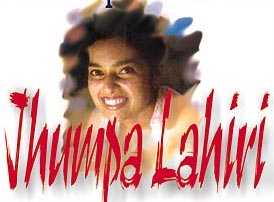 Indian-American writer Jhumpa Lahiri won the USD 50,000 DSC Prize for Literature, one of South Asia's top literary awards for her book 'The Lowland', it was announced at the Jaipur Literature Festival on Thursday evening.
The Pulitzer Prize winning author's tale of Indian brothers bound by tragedy was also shortlisted for the Man Booker prize last year.
The five authors shortlisted for the award were Bilal Tanweer for "The Scatter Here is Too Great", Jhumpa Lahiri for "The Lowland", Kamila Shamsie for "A God in Every Stone", Romesh Gunesekera for "Noontide Toll" and Shamsur Rahman Faruqi for "The Mirror of Beauty".
The Lowland was Lahiri's first book, but the fourth one to be published.
The DSC Prize for South Asian Literature was instituted in 2010 by Surina Narula.
According to the official website, "The submitted book can be written by an author of any ethnicity from any country, which predominantly features themes based on South Asian culture, politics, history, or people."
For the purposes of the award, the region includes India, Pakistan, Sri Lanka, Bangladesh, Nepal, Bhutan, Maldives, Burma and Afghanistan.
"This is an enormous honour for 'Lowland' and for me personally. I wish I was there in person to receive the award," newswire PTI quoted as saying through a phone conversation from Rome.
"I published the book with some apprehension that I have not done justice to the events that transpired in the story. I heard about what was happening in Calcutta at that time and based on what I heard I was curious over the years and novel was result of the curiosity," she added, according to the PTI report.
The prize was given by poet Vijay Shesadri at a ceremony at the ongoing Jaipur Literature Festival. Publisher Caroline Newbury accepted the award on Lahiri's behalf.
South Asia Today News Network

- More than 30 bloggers and litterateurs from across the world felicitated
- Five books and Parikalpana Samay Monthly Magazine along with Parikalpana Kosh Website launched
- Open discussion held on the topic ‘Society of margins on blog’ by South Asian bloggers


By Staff Reporter

By Shahnaz Siganporia
Mountain Echoes is an annual literary festival held in Thimpu, the capital of the happiest of nations -- Bhutan. A celebration of Himalayan culture that began in 2010, this intimate literary festival explores a cross-cultural dialogue between India and Bhutan. So imagine long literary discussions, book launches, film screenings, music concerts, workshops and schmoozing with the South Asian literati.
 This year, the fest will be held from May 21-24 at three venues in Thimphu: The Taj Tashi Hotel, the Tarayana Centre and the Nehru-Wangchuk Cultural Centre. If you're a jaded culture vulture that needs more persuading, here's five reasons to talk books in this breathtaking Himalayan kingdom.
It's in the happiest country in the world
Move over Pharrell, 'cause we're feeling a new happy! Wedged between India and China, the Buddhist kingdom of Bhutan is famous for its gorgeous Himalayan landscape, distinct culture and Gross Happiness Index. It's the only country that goes beyond economic indices and factors happiness into the quality of life by markers that take into account sustainable development, environmental protection, cultural preservation, and good governance.
Picture discussing literature in a land where traffic jams make it to the headlines, plastic bags are banned, and smoking and the sale of cigarettes prohibited. (Although international visitors may carry upto 200 cigarettes for their personal use but have to pay a 200% duty and carry a smoking permit at all times.)
 The Queen Mother takes part
Yes, a tonne of literary and cultural fests boast royal patronage, including this one, but her Majesty the Queen Mother Ashi Dorji Wangmo Wangchuck is also an accomplished author. Her first book, Of Rainbows and Clouds is a riveting family saga capturing the life and times of her father Yab Ugen Dorji. Her second, Treasures of The Thunder Dragon: A Portrait of Bhutan is a mix of memoir, history and folklore. Her participation extends way beyond the officious inaugural ceremony and she will be found in conversation with diplomat and author Navtej Sarna.
The dialogue between two very different democracies
From discussions on animism in the Himalayas and the art of folklore, to a deliberation on aphrodisiacs and food to suit your mood, and workshops on how to write a crime novel, the festival calendar is packed with a miscellany of subjects and speakers.

But the most anticipated discussion of the festival is a session titled 'Democracy: The Will of the People', between Lily Wangchuk, the first woman president of a registered political party in Bhutan, and author-diplomat Pavan K Varma. Dago Tshering, the former Bhutanese ambassador to India will also interact with journalist Mihir Sharma. The democratic systems of India and Bhutan, both emerging from landmark elections, will be juxtaposed in light of the outcomes of the change in government.
It's not just about Bhutanese authors
Apart from the massive Indo-Bhutanese contingent of writers, commentators and speakers, Mountain Echoes brings together a host of artists who are all part of the new Himalayan narrative. Sample these other attendees: Award-winning Scottish travel writer Gavin Francis, who is working on a book on the region; Danish photo-journalist Marie Venø Thesbjerg, who will be showcasing her most recent book My Way Of Life -- Stories by Children of Bhutan, which tells the story of Bhutanese culture in transition; and Yoko Ishigami, a Japanese artist who has been learning traditional Bhutanese painting and will be exhibiting at the festival.
Experience Bhutanese subculture
 Cultural expression in Bhutan is steeped in tradition and a need to preserve and protect is intricate to the nation's mandate. While things are usually done the traditional way, which is the window most visitors get into Bhutanese life, the festival exposes fissures of the new wave. Films like Tashi Gyeltshen's The Red Door or Kesang Chuki Dorjee's documentary Bhutan Women Forward will introduce audiences to Bhutan's bold voices.
Open mic and jam sessions with Bhutanese bands like Zhaw and The Ngorigaps, The Baby Boomers, Poisoned Apple and Daydream Farmers will reveal how the sounds of rock 'n' roll give voice to another side of Bhutanese culture.

South asian author's story
By Nazia Rizvi
By Nazia Rizvi
Kunzang Choden is the first Bhutanese woman writer to write a novel in English.
She was born in 1952, in the year of the dragon, in Bumthang, Central Bhutan. She spent her early childhood in Bhutan but went to India (Darjeeling) for her primary and secondary education. At the age of nine, Kunzang Choden trudged 12 days on foot and on horseback through dense jungles and splendid mountains in the daytime and slept inside narrow caves at night. She was on her way to school.
It was the Fifties. Bhutan, almost an isolated Himalayan kingdom till then, had hesitantly opened its doors to modern education. Till then, mostly boys received religious education in the Buddhist monasteries. But now, as government schools opened up, education became accessible to all. Girls too could attend these schools.
But Kunzang's father had a more radical idea. A prosperous farmer in central Bhutan's Bumthang district, he decided to send his daughter to a convent in eastern India. The villagers thought he was crazy. For a society where education was almost synonymous with men and religion, the idea of sending a daughter to school abroad was unheard of, almost sacrilegious. But Kunzang's father knew what he was doing.
So one fine day, they set her off on an arduous trek to St Joseph's School, Kalimpong. Kunzang even had a retinue of servants, and, hold it!, a translator, for company. Cooking their own food, dancing around campfires and listening to the sound of the wind, it was like a happy Long March towards the unknown. 'I didn't even know where I was going. I only knew India as the land Buddha came from,' recalls Kunzang, whose just-released work of fiction, The Circle of Karma (published by Zubaan/Penguin), makes her Bhutan's first woman novelist.
She has a BA Honours in Psychology from Indraprastha College in Delhi and a BA in Sociology from the University of Nebraska, USA. She has worked as a teacher and later for the UNDP in Bhutan. From 1990 onwards, Kunzang has been writing on Bhutanese oral traditions, folklore and women. She lives in Thimphu Bhutan with her husband and continues to research and document Bhutan's oral traditions.
She was born in 1952, in the year of the dragon, in Bumthang, Central Bhutan. She spent her early childhood in Bhutan but went to India (Darjeeling) for her primary and secondary education. At the age of nine, Kunzang Choden trudged 12 days on foot and on horseback through dense jungles and splendid mountains in the daytime and slept inside narrow caves at night. She was on her way to school.
It was the Fifties. Bhutan, almost an isolated Himalayan kingdom till then, had hesitantly opened its doors to modern education. Till then, mostly boys received religious education in the Buddhist monasteries. But now, as government schools opened up, education became accessible to all. Girls too could attend these schools.
But Kunzang's father had a more radical idea. A prosperous farmer in central Bhutan's Bumthang district, he decided to send his daughter to a convent in eastern India. The villagers thought he was crazy. For a society where education was almost synonymous with men and religion, the idea of sending a daughter to school abroad was unheard of, almost sacrilegious. But Kunzang's father knew what he was doing.
So one fine day, they set her off on an arduous trek to St Joseph's School, Kalimpong. Kunzang even had a retinue of servants, and, hold it!, a translator, for company. Cooking their own food, dancing around campfires and listening to the sound of the wind, it was like a happy Long March towards the unknown. 'I didn't even know where I was going. I only knew India as the land Buddha came from,' recalls Kunzang, whose just-released work of fiction, The Circle of Karma (published by Zubaan/Penguin), makes her Bhutan's first woman novelist.
She has a BA Honours in Psychology from Indraprastha College in Delhi and a BA in Sociology from the University of Nebraska, USA. She has worked as a teacher and later for the UNDP in Bhutan. From 1990 onwards, Kunzang has been writing on Bhutanese oral traditions, folklore and women. She lives in Thimphu Bhutan with her husband and continues to research and document Bhutan's oral traditions.
Her first novel, The Circle of Karma, was published in 2005. She has penned short stories that have been compiled into books; Folktales of Bhutan, Bhutanese Tales of the Yeti, Tales in Colour and other stories.
She is also the author of Chilli and Cheese- Food and Society in Bhutan and Dawa: The Story of a Stray Dog in Bhutan. She is a Co-Director of the Mountain Echoes Literary Festival and has written and published a number of books for young children in last few years.

New Delhi: Former Miss India Finalist Tahira Kochar who debuted in recently released Rabba Main Kya Karoon launched her grandmother Nony Singh’s Photography Book 'The Archivist'. The event happened at India habitat Centre, Lodhi Road, New Delhi.
Nony Singh is the mother of famous photographer Dayanita Singh, who is Tahira Kochar’s Maternal Aunt. The launch happened on the occasion of “Delhi Photo Festival” where Nony Singh with her granddaughter Tahira Kochar launched her book “The Archivist” and presented to veteran Photojournalist Raghu Rai.
